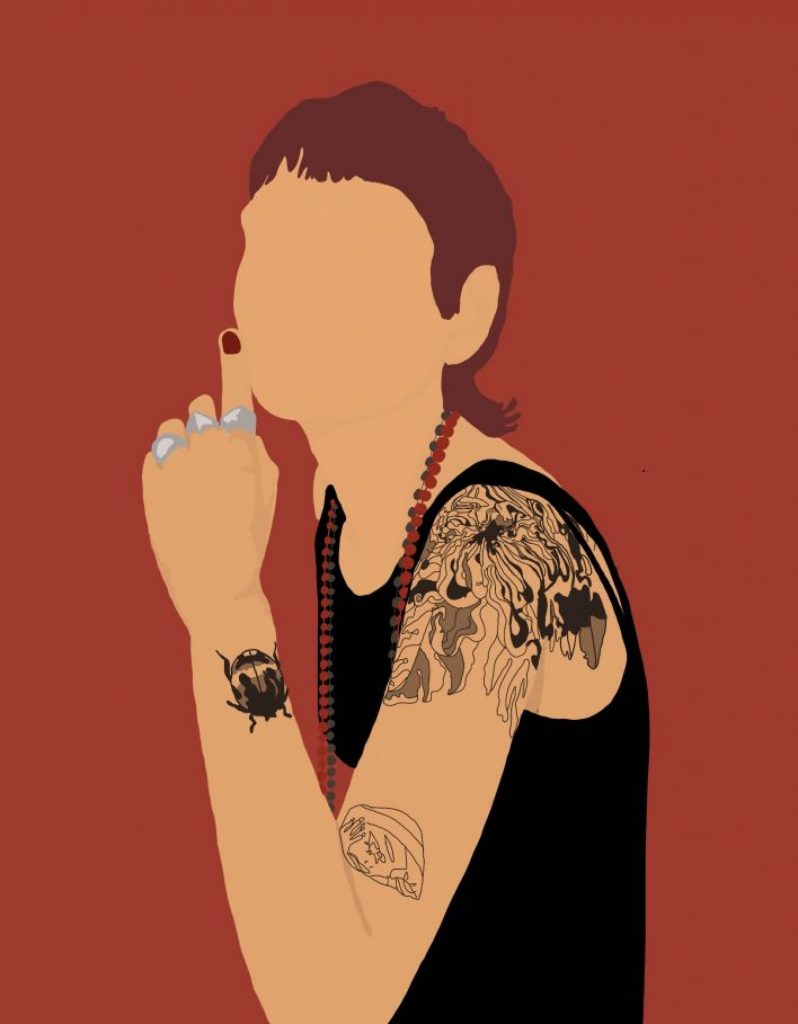
Extracts from ‘Queer Tattoo’
Tattoos have long served as a powerful means of self-expression and identity. For the queer community, tattoos can be particularly significant, serving as symbols of pride, resilience, and a shared cultural heritage. The impact of tattoos in the queer community extends beyond mere aesthetics; they play a crucial role in personal empowerment, community building, and the affirmation of identity.
Today as the queer community is more accepted and people are more confident in coming out, the tattoo scene has become more hospitable to queer tattooers and clientele. However, there will always be heteronormative tattoo spaces that simply just don’t cater for queer people to feel comfortable. As shown in this quote from the preface of ‘Queer Tattoos’, “It has been evident in the gatekeeping of the craft, the treatment of female tattooers, the objectification of women on the covers of our magazines, convention posters, glove boxes and so on. We have seen how this attitude bleeds into the treatment of some customers. This is not to say every tattooer or shop falls into this characterisation, but there is an undeniable history here that queer spaces have rightly chosen to detach themselves from.” This shows that many queer tattoo artists have detached themselves from these traditional tattoo spaces and formed together a whole new space.
This is shown in places like Brighton, a town with the biggest LGBTQ+ population in the UK. There are queer tattoo studios on every corner, such as Studio Baby in Kemp Town. I spoke to Karen, the owner of Studio Baby a few years ago and she said that many queer people may get intimated by the way in which these spaces feel or look or even the name, often having some kind of violence in the name with words like gun, or hard, or death. Why would a queer person want to bring themselves into a space where they might got get accepted. Hence the reason for so many queer studios to create a safe space to be tattooed.
For many queer people, tattoos are a way to express their identities and experiences. In a world where queer identities have often been marginalised or misunderstood, tattoos offer a canvas for personal storytelling. Each tattoo can represent a piece of one’s journey—be it a symbol of coming out, an emblem of resistance against societal norms. For example, a rainbow flag tattoo might signify LGBTQ+ pride, while a butterfly might represent transformation and growth.
I spoke to my friend Deven about what having tattoos as a queer person means to him. He began talking about how tattoos can be a way of queer people reclaiming their bodies, especially trans people. He said, “As a trans person, I feel tattoos give me a say in what’s going on with my body”. He goes on to explain that with a struggle between identity and appearance, tattoos can be a way for queer people to express themselves and tell a story through their bodies. Getting a tattoo can be an act of personal empowerment. Many trans people have experienced body shaming, dysphoria, or other forms of discrimination. Tattoos can transform scars into art, turning painful experiences into symbols of strength and survival. Furthermore, many trans men get tattoos after top-surgery around their scars, either for coverage or to further masculinize their appearance.
Moreover, we go on to talk about the style of tattoos he has, which is mainly ‘traditional’. He said, “The style of tattoos you get, indicates the types of things you like and what kind of person you are”. With traditional tattoos often being associated with being ‘masculine’ or ‘straight’, getting these tattoos is almost a way of fighting the system and reclaiming a world that has been dominated by a cis, heteronormative society.
But people are becoming more open with the way they present themselves and different styles of tattoos are popping up all over the queer community, with different styles being associated with various movements and ideas.
Historically, tattoos have been associated with rebellion and nonconformity, traits that resonate deeply within the queer community. In the 40s and 50s, a symbol for lesbians to get tattooed was a nautical star on the inside of their wrist which was covered by a watch during the day. It indicated their sexuality without being outed (A term used in the community which means your sexuality becoming public knowledge without your consent). The nautical star also represented protection and finding your way home when lost in life, showing that these tattoos were symbols of strength and reclamation. Furthermore, the late 20th century, as the LGBTQ+ rights movement gained momentum, tattoos became a way for queer individuals to visibly assert their identities and resist heteronormative expectations. The same ideals apply today but with more acceptance and the tattoos themselves paying homage to the long history of LGBTQ+ struggle.